

You don’t strictly need a car to enjoy South Beach, but you do for almost everything else in Miami, and you definitely need one for day trips. If your whole holiday is sand, hotel, and Ocean Drive, you can survive on walking and rideshare. The moment you want Wynwood murals, a Wynwood-to-Brickell dinner, a beach the locals actually use, or the Florida Keys, the math changes fast. This guide walks through what is walkable, what the public transport really covers, what parking and tolls cost, the age rules, and the exact trips where a rental stops being optional.
If you already know you want wheels, you can rent a car in Miami and skip to the driving tips lower down. If you’re still deciding, read on.
Do you need a car in Miami?
You need a car in Miami if you plan to leave the immediate South Beach or Brickell core. Those two areas are walkable and well served by free or cheap transit. The wider metro is spread out, transit is patchy between neighborhoods, and rideshare adds up. For the Keys, Everglades, Fort Lauderdale, malls, or Orlando, a rental is the practical choice.
Which parts of Miami are walkable
Miami is not one compact city. It is a string of neighborhoods connected by highways, and the gaps between them are wide.
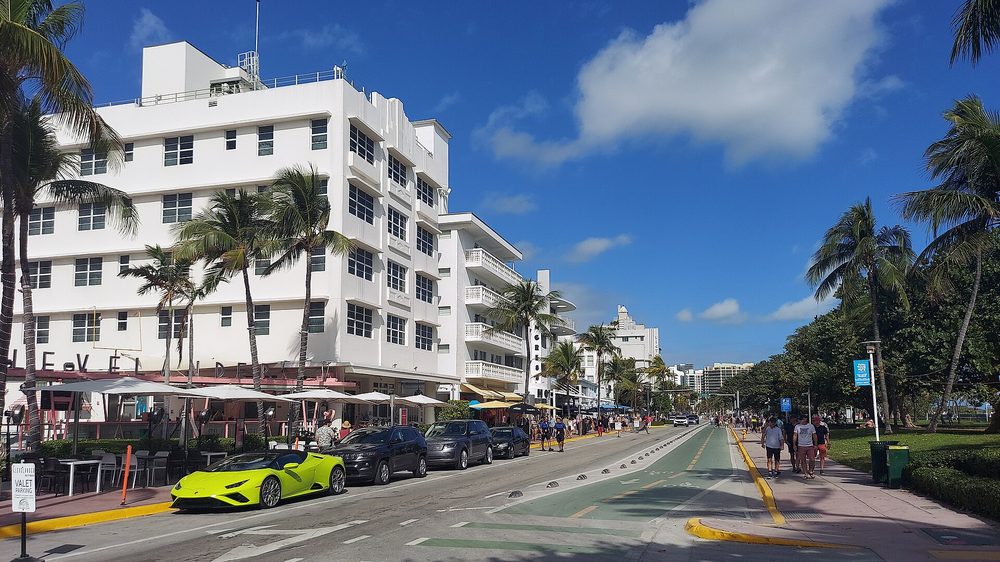
South Beach is the most walkable part. Ocean Drive, Lincoln Road, Collins Avenue, the beach, restaurants, and most boutique hotels sit within a flat, grid-friendly square mile. You can spend three days here on foot and never miss a car.
Brickell works the same way. It is dense, vertical, and built for pedestrians, with the Brickell City Centre mall, bars, and waterfront walkways close together. The free Metromover loops right through it.
Downtown Miami is walkable in patches but quieter after office hours, and some blocks feel empty at night.
Everything else is a different story. Wynwood and the Design District are great once you arrive, but getting there means a ride. Coconut Grove, Coral Gables, Little Havana, Key Biscayne, and the bigger beaches north of South Beach are all spaced out. Walking between any two of these is not realistic, and that is where most visitors underestimate the city.
Public transport in Miami: what it actually covers
Miami has transit, but it was built around commuters, not tourists hopping between attractions.
Metromover
The Metromover is the standout. It is a free, automated elevated train that loops through Downtown and Brickell, runs frequently, and is genuinely useful if you are staying in those areas. For a Brickell or Downtown base, it covers a lot of short hops at zero cost.
Metrorail
The Metrorail is a single elevated heavy-rail line running roughly north to south, from Palmetto and Hialeah down to Dadeland, with a branch to the airport. It is handy for the airport-to-Brickell run and for reaching Coral Gables or Dadeland, but it does not go to South Beach, and it does not serve most tourist spots. A one-way ride is about $2.25.
Buses and the trolleys
Miami-Dade buses cover the gaps the rail misses, including the route across the causeway to South Beach. They work, but they are slow and the frequency varies by line. Several neighborhoods also run free local trolleys (Miami Beach, Coral Gables, Coconut Grove), which are useful for short local loops but useless for crossing the metro.
Rideshare reality
Uber and Lyft are everywhere and fill the gaps transit leaves. The catch is cost. A typical cross-town ride runs roughly $15 to $30, surge pricing hits hard during events and late nights, and the airport-to-South-Beach trip is often $35 to $55. Two or three rides a day for a week quietly outprices a rental. If you are a couple staying put in South Beach, rideshare is fine. If you are a family bouncing between neighborhoods, it gets expensive.
Parking in South Beach and beyond
If you do rent, parking is the trade-off you accept for South Beach, and it is worth understanding before you arrive.
Street parking in South Beach is metered, busy, and mostly handled through the ParkMobile app rather than coins. Expect to pay by the hour, and expect spaces to fill on weekends and during events. Public garages run by the city are the more reliable option, with flat or hourly rates that are usually cheaper and less stressful than circling the block. Many hotels charge separately for valet or self-parking, often $30 to $50 a night, so check that before you book a room.
Outside South Beach, parking is much easier. Wynwood has lots and garages, Brickell and the malls have structured parking, and the day-trip destinations almost all have free or cheap lots. The parking headache is specific to the beach core, not the whole region.
SunPass and Florida tolls
Florida runs a lot of cashless toll roads, and Miami is full of them. Expressways like the 836 (Dolphin), 826 (Palmetto), and 874 use electronic tolling with no cash booths. You cannot stop and pay; cameras read your plate or transponder.
For a rental this matters. Most Miami rental cars come with a SunPass transponder or a pass-through toll program built in. The tolls themselves are charged to you, often with a small daily admin fee from the rental company on top. Ask at pickup how your car handles tolls so you are not surprised by the bill. If you plan to drive much around the metro, factor a few dollars a day in tolls into your budget.
Age rules: who can rent
The standard minimum age to rent in Miami is 21. Drivers between 21 and 24 can almost always rent, but they pay a young-driver surcharge, which can be $25 to $35 or more per day depending on the company and car class.
Premium, convertible, and exotic cars carry stricter rules. Many require the driver to be 25 or older, and the high-end exotics often set the bar higher still and ask for extra insurance or a larger deposit. If you are under 25 and dreaming of a Lamborghini for the day, check the specific car’s policy before you plan around it.
When you need a car versus when you don’t
Here is the simplest way to decide.
You probably don’t need a car if you are:
- Staying in South Beach for the whole trip
- Based in Brickell or Downtown and using the free Metromover
- A couple or solo traveler doing beach, food, and nightlife in one area
- Comfortable using rideshare for the occasional trip out
You do need a car if you want to:
- Drive the Overseas Highway to the Florida Keys (Key Largo, Islamorada, Key West)
- Visit Everglades National Park for airboats and wildlife
- Reach Fort Lauderdale, Boca Raton, or West Palm Beach up the coast
- Hit the big outlet malls like Sawgrass Mills or Dolphin Mall
- Make the Orlando theme-park run, about three and a half hours north
- Explore Coconut Grove, Coral Gables, Key Biscayne, and the quieter beaches at your own pace
The pattern is clear. Stay still and you can skip the car. Move around, or leave the city, and you need one.

The day trips that decide it
The Keys are the single most common reason visitors regret not renting. There is no train down the Overseas Highway, rideshare out there is expensive and unreliable, and an organized tour locks you into someone else’s schedule. With your own car you can stop at roadside seafood shacks, snorkel spots, and the Seven Mile Bridge whenever you like. An open-top convertible like the Ford Mustang convertible is a popular choice for this drive, since most of the route is wide open and scenic.
The Everglades sit just west of the city and reward an early start, which a car makes easy. Fort Lauderdale and the northern beaches are a straightforward highway run. And if Orlando is on the list, driving is far cheaper and more flexible than any other option for a family.

Driving in Miami: what to expect
Driving here is easy in some ways and demanding in others.
Cars drive on the right-hand side, and nearly every rental is automatic, so visitors from manual-driving countries adapt quickly. Roads are wide and well signed. The challenge is traffic and aggression. I-95 and US-1 get congested at rush hour, lane discipline is loose, and drivers change lanes fast. Stay alert, leave space, and use a phone mount with live navigation so you are not hunting for exits.

For the metro and day trips, an SUV gives you space and comfort. A Jeep Wrangler suits travelers who want a more rugged feel for Everglades roads and beach days, while something like a Tesla Model Y keeps fuel costs down and handles the highway runs smoothly. Pick the car to the trip rather than the trip to the car.
Costs: rental versus going without
Rough numbers help. An economy rental in Miami often lands around $40 to $70 a day before extras, with parking, tolls, and the young-driver surcharge stacking on top. A South Beach-only traveler relying on walking, the trolley, and a few rides might spend less than that on transport. But the moment you add day trips or daily cross-town movement, a rental becomes the cheaper and more flexible option, and it buys you time you would otherwise lose waiting for rides.
The honest answer to the headline question depends on your itinerary. Lock yourself to South Beach and you can leave the keys at home. Want the real Miami and the Florida beyond it, and a car turns from a nice-to-have into the thing that makes the trip work.