
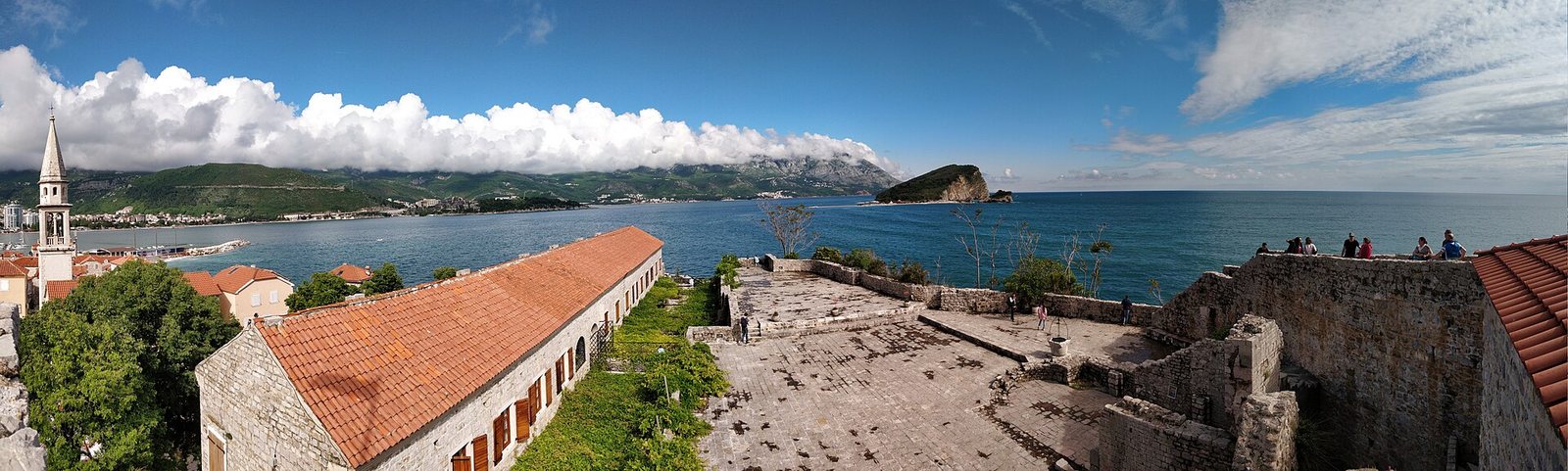
Driving in Montenegro is mostly straightforward on the coast and main roads, and slow going on the mountain serpentines. The country is small, so you can drive from a beach near Budva to a national park in the morning and be back for dinner. Distances look short on the map but take longer than you expect, because the good coastal road bends around every bay and the mountain roads climb in tight hairpins. If you want freedom to reach Kotor, Sveti Stefan, Cetinje and Durmitor without waiting for buses, a car is the easiest way to do it. Many visitors rent a car in Budva and use it as a base for day trips along the coast and inland.
Is it easy to drive in Montenegro?
For most drivers, yes. The coast and the main highways are well paved, signs are clear, and traffic rules match the rest of Europe. The harder part is the mountain roads, which are narrow, winding and sometimes single-lane with two-way traffic. Drive slowly on the serpentines, use the horn before blind corners, and you will be fine.
Road conditions
The roads split into two worlds. The coastal road (the Adriatic Highway, marked E65/E80) and the main routes to Podgorica are in good shape: two lanes, decent surface, painted lines. Driving here feels normal, the main thing is heavy summer traffic through towns like Budva and Kotor.
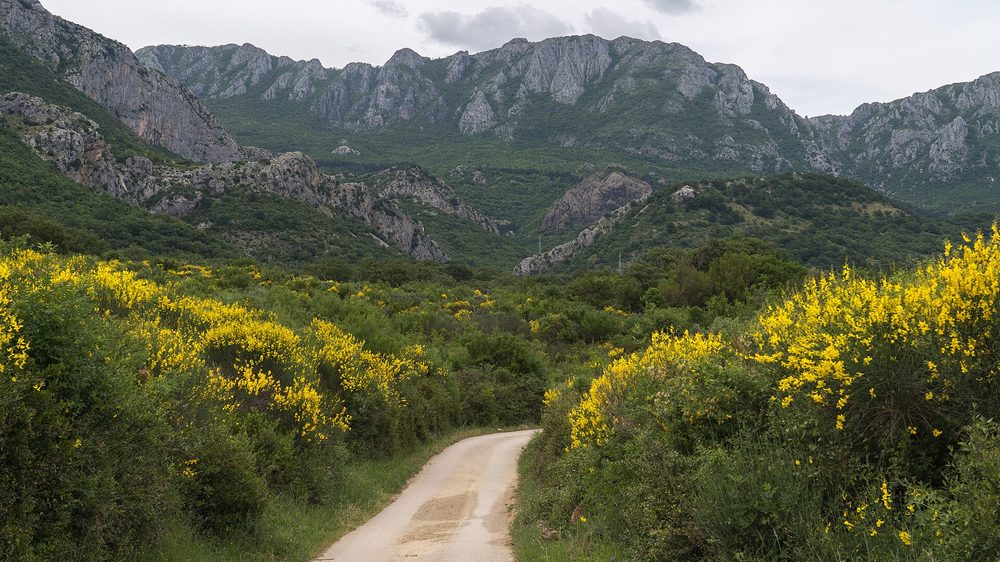
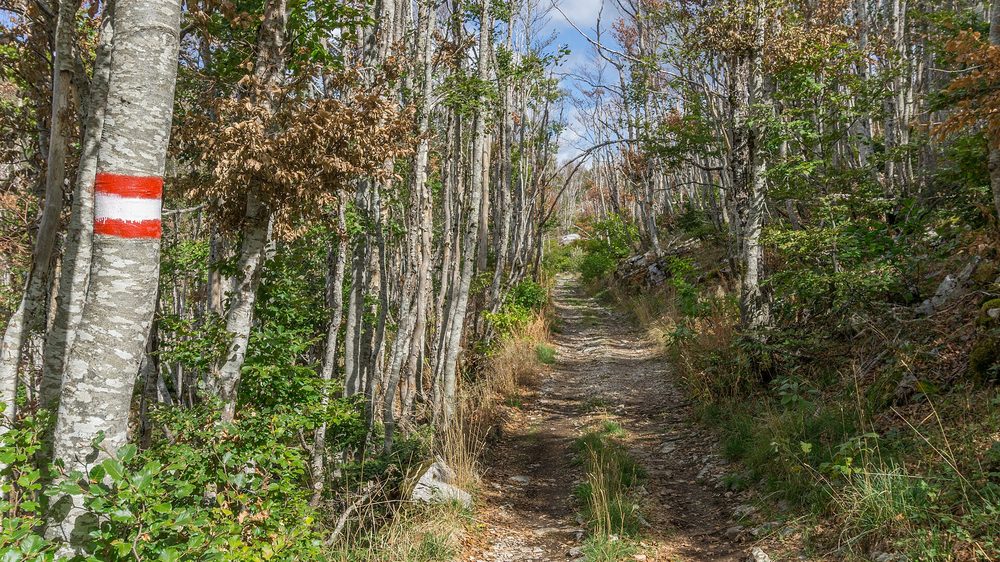
Then there are the mountain roads. Once you turn inland or climb toward Lovcen, Cetinje or Durmitor, the road narrows and starts winding. Some sections are barely wide enough for two cars, the edges have steep drops, and the guardrails are not always there. These roads are not dangerous if you slow down, but they are tiring. Plan extra time and do not try to rush a mountain pass.
A few stretches still have potholes after winter, mostly on smaller inland roads. Watch the surface, keep your distance, and you will not have problems with a normal rental car.
One thing to get used to is how the coastal road behaves in summer. Through Budva, Petrovac and the approach to Kotor it can crawl in July and August, with cars looking for parking and pedestrians crossing everywhere. The road itself is fine, the volume is the issue. If you start a drive early in the morning you avoid most of it, and the same trip that takes an hour at midday can take 35 minutes at 8am.
The Sozina tunnel toll
Montenegro is almost entirely toll-free. There is one toll worth knowing about: the Sozina tunnel, which cuts through the mountains between the coast (near Sutomore) and the road to Podgorica. It is a long tunnel that saves time over the old mountain pass. The fee is small, a few euros for a car, and you pay in cash or by card at the booth. Every other road in the country is free, so you do not need any vignette or sticker.
Licence and International Driving Permit
You drive on your national licence. If your licence is not in the Latin alphabet, or you want to avoid any argument with a rental desk or a police officer, bring an International Driving Permit (IDP) as well. The IDP is just a translation of your licence and has to be carried together with the original. EU and UK licences are accepted on their own, but an IDP never hurts.
When you collect the car you will normally need your licence, your passport and a credit card for the deposit. Check the minimum age and the young-driver surcharge with the rental company before you book.
How people drive and tips for the road
Driving style on the coast is relaxed in winter and busy in summer. Local drivers overtake confidently, sometimes on roads where you would not, so do not feel pushed into a risky pass. Let faster cars by when you can and keep your own pace.
A few practical tips:
- Dipped headlights are required at all times, day and night.
- Seatbelts are mandatory front and rear, and using a phone without a hands-free kit is not allowed.
- Overtake only where you can clearly see the road ahead. On the serpentines, do not overtake at all.
- In tunnels, switch on headlights and keep a sensible gap. Some older tunnels are unlit and rough inside.
- Sound the horn lightly before blind hairpins on narrow mountain roads. Locals do it and it works.
- Carry the car documents, a warning triangle, a reflective vest and a first-aid kit. Rentals usually include these, but check.
Parking is the real headache in the popular towns. The old towns of Kotor and Budva are pedestrian zones, so you park outside the walls in paid lots or street bays. In summer these fill up fast, especially in Kotor, so arrive early or be ready to walk. Pay at the machine or with the parking app, and do not leave the car in an unmarked spot near the old town, fines and towing happen.
The Kotor Bay drive
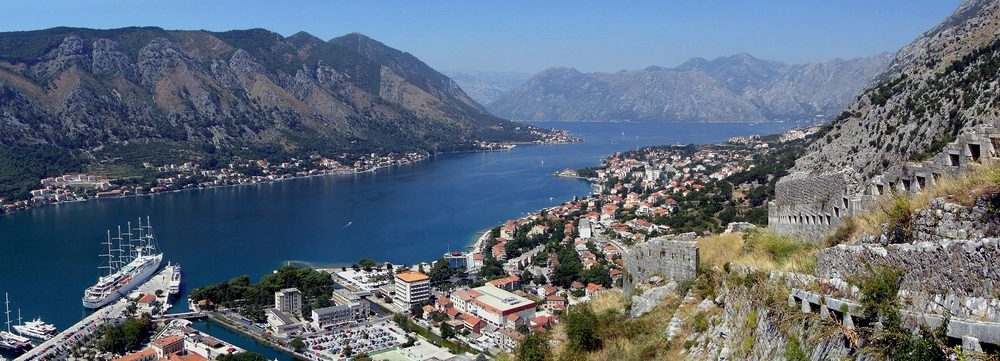
The drive around the Bay of Kotor is the one almost everyone does, and it deserves the reputation. From Budva it is roughly 30 to 40 minutes to Kotor, and the road hugs the water the whole way, past Tivat and the small bayside villages. The bay looks like a fjord, with mountains dropping straight into still water and old stone churches on tiny islands.
If you want more, drive the road above Kotor toward Lovcen. The Kotor serpentine climbs the mountain wall in a long series of hairpin bends, with the bay opening up further below at every turn. It is slow and narrow, so take your time, but the view from the top is the best in the country. From there you can carry on to Cetinje, the old royal capital.
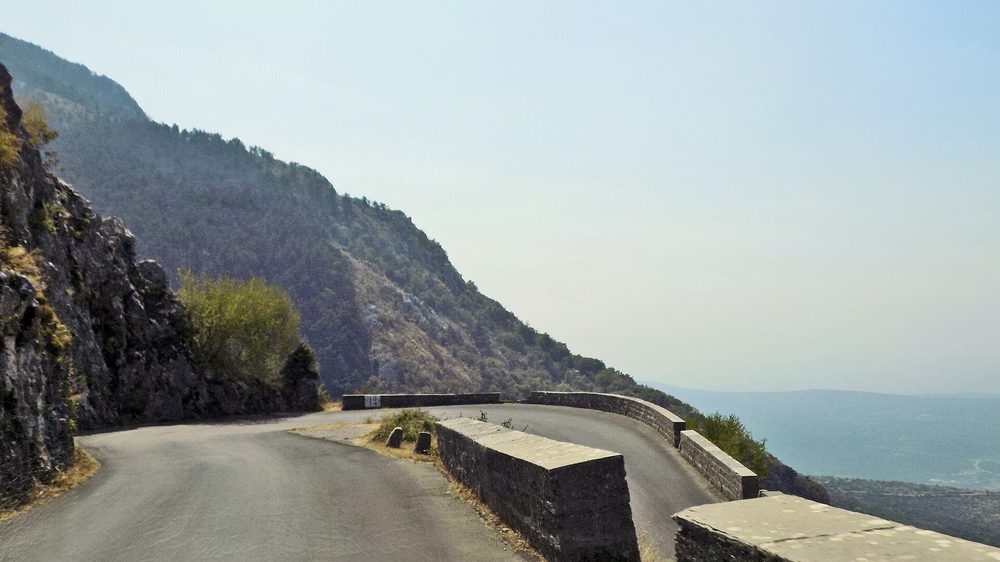
The Lovcen and Njegusi serpentine
Behind Kotor, the road up to Lovcen National Park is one of the great mountain drives in the Balkans. It twists up to the village of Njegusi, famous for its smoked ham (prsut) and cheese, then on toward the Njegos mausoleum at the top of Lovcen. The road is narrow with very tight turns, and in a few spots two cars have to ease past each other, so a compact car makes life easier here. A small SUV like the Dacia Duster handles the climb comfortably without being too wide for the hairpins.
The Kotor Bay ferry shortcut
If you are heading north along the coast, for example toward Herceg Novi or Croatia, you can skip a long loop around the inner bay by taking the ferry across the narrows. The crossing runs between Lepetane and Kamenari and takes only a few minutes. Ferries leave very frequently in season, you pay the small fee on board, and it saves a good 30 to 40 minutes of driving compared with going all the way around through Kotor and Risan. It runs day and night, so it is handy for early starts and late returns.
Fuel, parking and police checks
Fuel stations are common on the coast and main roads, and most take cards. Inland and in the mountains they thin out, so fill up before a long mountain run rather than hoping for a station near Durmitor. Petrol and diesel are sold under the usual European names.
Speed limits are 50 km/h in towns, 80 km/h on open roads and higher on the few dual-carriageway sections, but always follow the signs. Police do set up speed checks, especially on the coastal road in summer, and they do stop cars for routine document checks. Keep your licence, IDP and car papers handy, stay polite, and there is nothing to worry about. Fines for speeding or seatbelts can be issued on the spot.
The drink-driving limit is low, so it is best to treat it as zero if you plan to drive. Police take it seriously. If you are heading out for dinner and wine in the old town, walk or take a taxi and pick the car up the next day. Parking the car overnight in a paid lot is cheaper than a fine.
Best drives from Budva
Budva sits in the middle of the coast, which makes it a good base. A few trips worth doing with a rental:
- Kotor: 30 to 40 minutes along the bay, the classic short drive and old town visit.
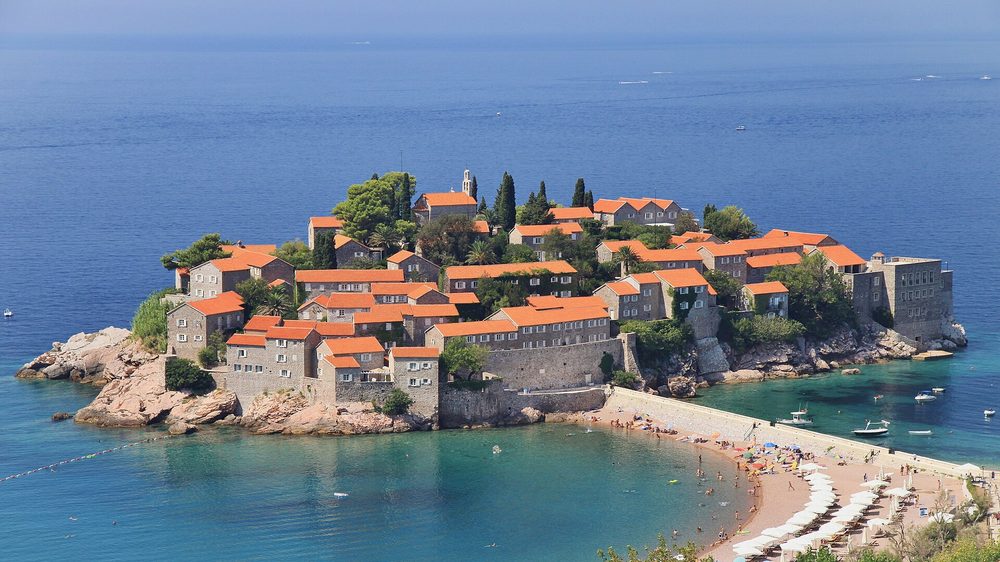
- Sveti Stefan: about 10 minutes south, the famous island village, great for a photo stop and a swim nearby.
- Cetinje: under an hour inland, the historic capital, often combined with the Lovcen climb.
- Durmitor National Park: a longer day trip north, three to four hours each way, with the Tara Canyon and high mountain scenery. A higher-clearance car such as the Toyota RAV4 suits the longer inland roads.
For pottering around town and tight coastal parking, a small car like the Fiat 500 is easy to place in those cramped Budva and Kotor bays. For longer mountain days, choose something with a bit more clearance and a comfortable seat.
Drive carefully on the serpentines, leave time for traffic and parking in summer, and Montenegro rewards you with some of the best short road trips in Europe.