
Driving in Turkey as a tourist is straightforward on the coast and the motorways, and busier in the cities. Turkey drives on the right with left-hand-drive cars, the main roads along the Mediterranean are modern and well signed, and most rental cars are automatic. You will need your national licence, a passport and a card for the deposit, and an International Driving Permit is worth carrying. Once you are out of the city traffic, the open roads around Antalya are some of the best in the country. If you want to plan a trip, you can rent a car in Antalya and pick up at the airport in a few minutes.
Is Turkey left-hand or right-hand drive?
Turkey is right-hand drive: you drive on the right side of the road, the steering wheel is on the left, and rental cars are left-hand drive — the same layout as the US and most of Europe. Most rentals are automatic. If you already drive on the right at home, nothing changes. If you come from the UK, Cyprus or another left-driving country, take it slowly at junctions and roundabouts for the first day.
What age can you drive in Turkey?
The minimum age to rent and drive a car in Turkey is usually 21 to 23, depending on the car class, and you normally need to have held your licence for at least one year. Larger and premium cars may require 25+ and can add a young-driver surcharge. There is no extra age rule for driving itself once you hold a valid licence and meet the rental company’s minimum.
Can tourists drive in Turkey?
Yes. Tourists can drive in Turkey on a valid national driving licence for up to six months. You will also want a passport and a credit card for the rental deposit. An International Driving Permit is recommended and is sometimes asked for at the rental desk, especially if your licence is not in the Latin alphabet. The minimum rental age is usually 21 to 23.
Driving in Turkey at a glance
Here are the essentials for a tourist behind the wheel, so you know what to expect before you collect the keys.
| Topic | Detail |
|---|---|
| Drives on | The right |
| Licence | National licence, valid up to 6 months for visitors |
| IDP | Recommended, sometimes required at the desk |
| Minimum age | Usually 21 to 23, depending on the car class |
| Tolls | Electronic HGS only, no cash booths |
| Speed limits | 50 in town, 90 on open roads, 120 on motorways |
| Fuel | Petrol and diesel, attendants pump for you |
| Alcohol limit | 0.05% for private cars, zero with a trailer |
| Emergency number | 112 |
Licence and International Driving Permit
Most visitors drive in Turkey on the licence from their home country. It is accepted for short stays, and rental desks deal with foreign licences every day. The catch is the alphabet. If your licence uses Latin characters, like a UK, US, German or Dutch one, you are generally fine on the national licence alone. If it uses a different script, an International Driving Permit translates the details into a form the police and the rental staff can read.
I would carry the IDP either way. It costs little, it is quick to get at home before you travel, and it removes any argument at the counter. The IDP is never used on its own. It only works alongside your real licence, so keep both in the car.
Hold your licence for at least a year, sometimes two for larger cars, and bring it physically. A photo on your phone is not enough at a Turkish rental desk.
Renting a car: deposit, automatic or manual
Booking ahead is cheaper than walking up, particularly in the Antalya summer when demand is high. When you collect the car, the desk will take a deposit on a credit card. A debit card is sometimes refused, and cash deposits are rare, so travel with a proper credit card in the main driver’s name.
Most rentals on the coast are automatic, which suits the stop-start city traffic and the long motorway runs. Manual cars are out there and cost a little less, but the choice is smaller. A small hatchback like a Toyota Corolla handles the resorts and the airport runs well, and it is easy to park in the narrow old-town streets.
Check the car over before you drive off. Photograph every scratch, the wheels and the fuel gauge, and confirm whether the tank policy is full-to-full. Make sure the car has its HGS toll tag fitted, because almost every modern rental does, and you will need it on the motorways.
HGS electronic tolls
Turkey runs its motorways and major bridges on an electronic system called HGS. There are no cash booths. You drive through the toll point at low speed, an overhead reader picks up the tag on the windscreen, and the charge is logged automatically.
Rental cars come with an HGS tag already fitted to a prepaid account, and the tolls you run up are billed back to you by the rental company, often with a small admin fee per crossing. You do not stop, you do not pay anyone at the roadside, and you do not need to top anything up yourself. Just slow down at the gantry and keep moving in the HGS lane.
This matters most around the big cities and on the bridges over the Bosphorus in Istanbul, where passing a toll point without a working tag leads to a fine that lands on the rental account. On the Antalya coast you will mainly meet HGS on the faster intercity stretches rather than the scenic roads, but the tag still needs to be in the car.
Road conditions across Turkey
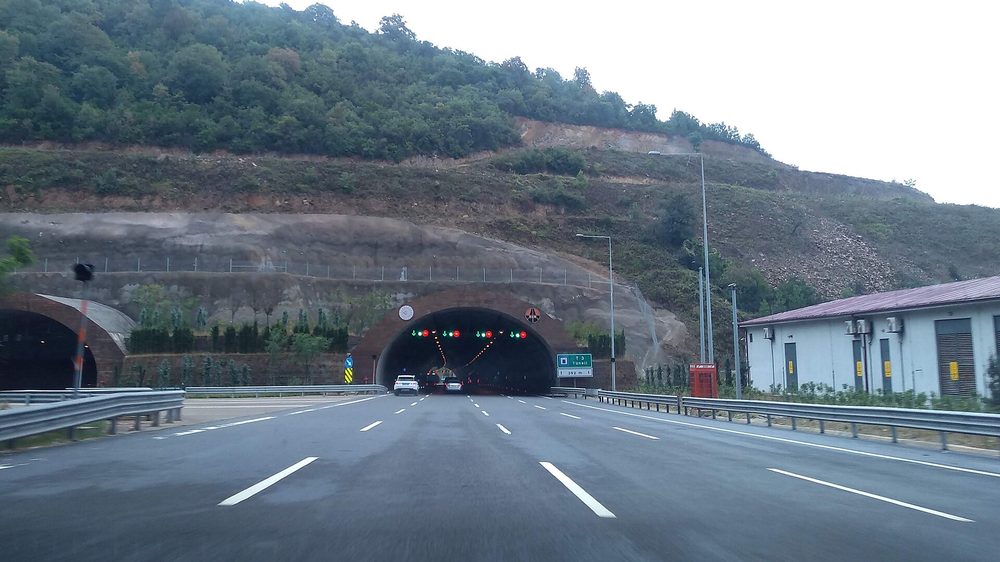
The contrast is sharp. The coastal motorways and the main highways are modern, smooth and clearly marked, often to a higher standard than the roads back home. Driving from Antalya towards Side or down the coast is easy, with two or three lanes and good surfaces.
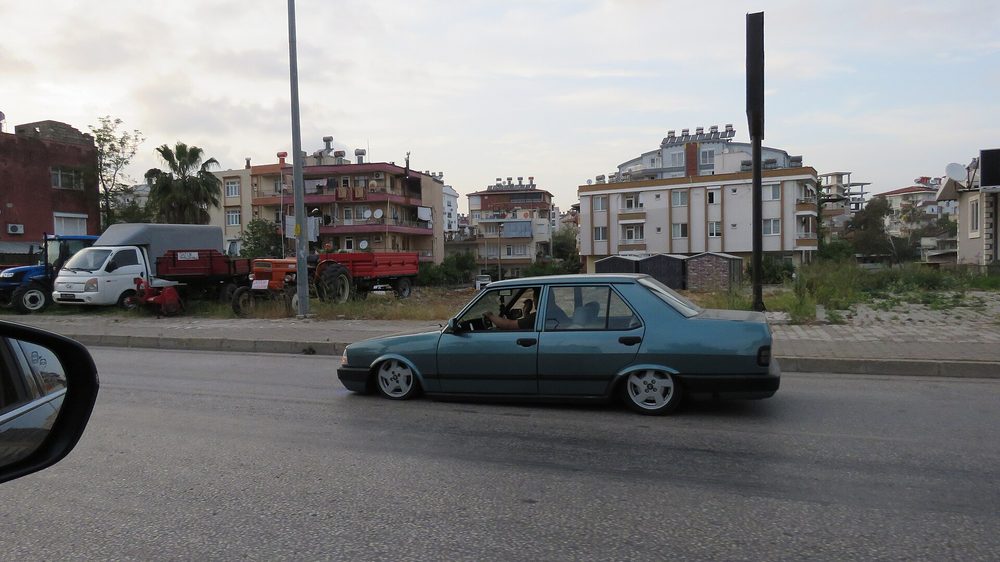
Cities are the other extreme. Traffic in Antalya, Izmir and especially Istanbul is dense, lane markings are treated as a suggestion, and scooters thread through the gaps. The old quarters have tight one-way streets that were never built for cars. Parking gets scarce in the centre, so I tend to leave the car at the hotel and walk or take a taxi for city sightseeing.
Mountain roads are the third type. The Taurus range behind Antalya has switchbacks, steep drops and the occasional rockfall. The surface is usually fine, but you want daylight, a steady pace and patience behind slow lorries. Watch for animals on the rural roads, and in spring expect water and gravel washed across the tarmac after rain.
Driving culture and safety
Turkish driving is assertive rather than aggressive once you read it. Drivers use the horn to signal presence, not anger, and they expect you to keep moving and commit to gaps. Tailgating is common, and flashing headlights from behind usually means move over. On the motorway, keep right unless overtaking and let faster traffic pass.
A few habits keep you safe. Indicate clearly, because others may not. Leave a bigger gap than you would at home, since braking can be sudden. Avoid driving in the cities after dark when you are still finding your feet, and skip the mountain passes at night altogether. Seatbelts are required front and back, and using a handheld phone is fined.
Turkey enforces alcohol limits strictly, with a zero tolerance for anyone towing. The limit for a normal car is 0.05%, which in practice means do not drink and drive. The general emergency number is 112.
Fuel, parking and the police
Fuel stations are everywhere on the main roads and are full service, so an attendant fills the tank while you stay in the car. Tell them the amount or ask for full, say petrol (benzin) or diesel (dizel), and pay by card or cash at the kiosk. Prices sit at the higher European end, and diesel and petrol are close in cost.
Parking in the resorts is easier than in the city centres. Look for blue-lined bays and signed car parks (otopark), and pay at the machine or the warden. In old towns, paid garages save a lot of circling. Avoid blocking residents’ entrances, which get cars towed quickly.
The police run regular checkpoints and they are routine, not a problem. Have your licence, the rental documents and your passport to hand, be polite, and you will usually be waved on. Speed cameras, both fixed and mobile, are common on the open roads and the motorways. Speeding fines on a rental are charged back to you later through the rental company, so stick to the posted limits, which drop sharply on the approach to towns.
The best drives around Antalya and the Mediterranean coast
This is the reward for renting a car. The Antalya region packs short, scenic drives into easy day trips, and a car frees you from tour-bus timetables. Before you set off, it helps to know the best time to visit Antalya, since the shoulder seasons give you quiet roads and mild weather for the mountain routes.
Antalya to Side
Head east along the coast to Side, around an hour away, where Roman ruins sit right by the beach. The road is fast and simple, mostly dual carriageway, and you can stop at quieter beaches along the way. Side itself has paid car parks just outside the old town, which is the sensible place to leave the car.
Antalya to Kemer and the western coast
West of the city the road climbs into the pine-covered hills above Kemer, with sea views opening up on the bends. It is a slower, prettier drive than the eastern route, with small resort bays like Beldibi and Goynuk to pull into. The scenery is the point here, so take your time.
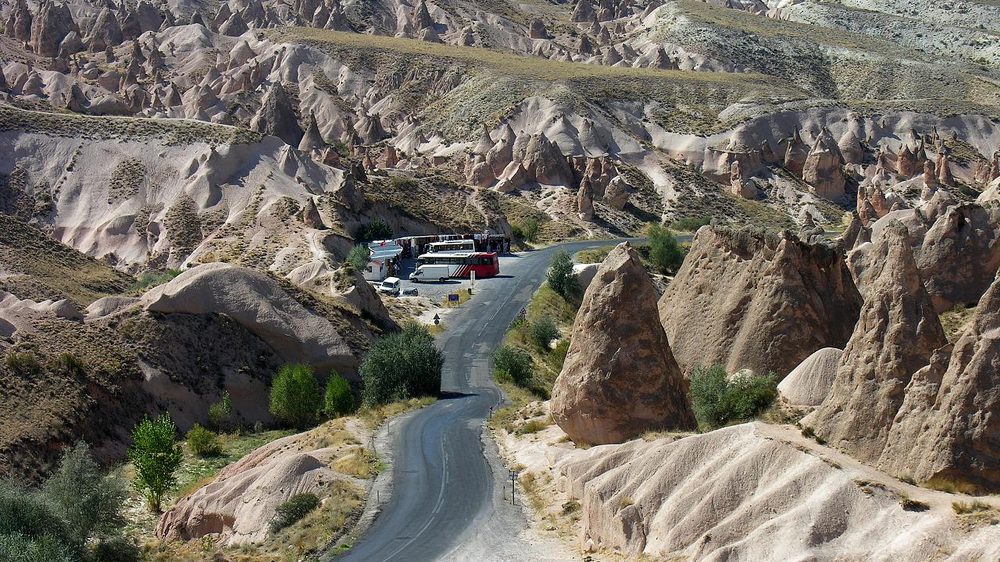
Into the Taurus Mountains
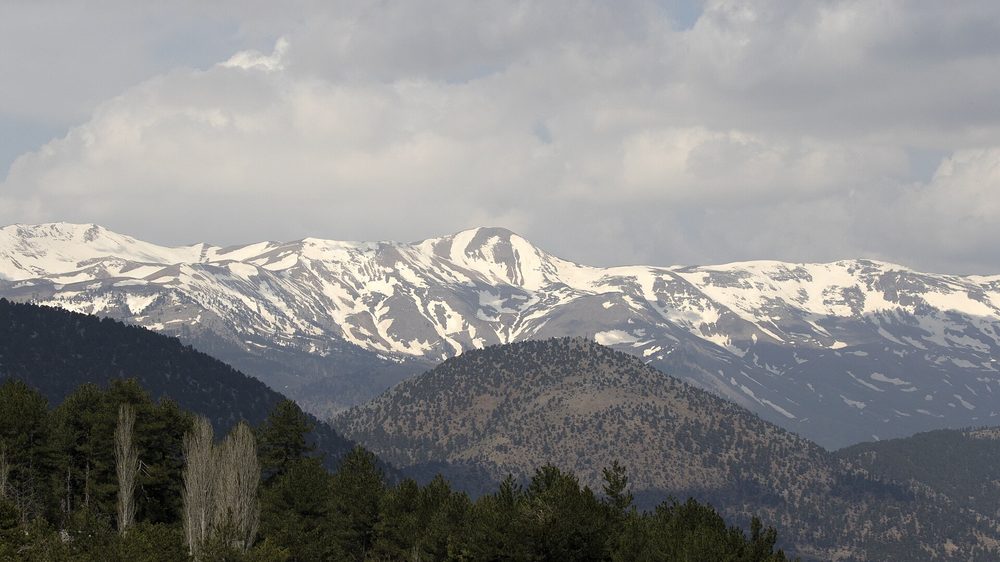
For a half-day inland, the Taurus Mountains rise straight behind Antalya. The roads towards the Koprulu Canyon and the Duden and Kursunlu waterfalls wind through gorges and pine forest. These are mountain roads with proper bends, so drive them in daylight and keep something in reserve for slow traffic.
Day trip to Pamukkale
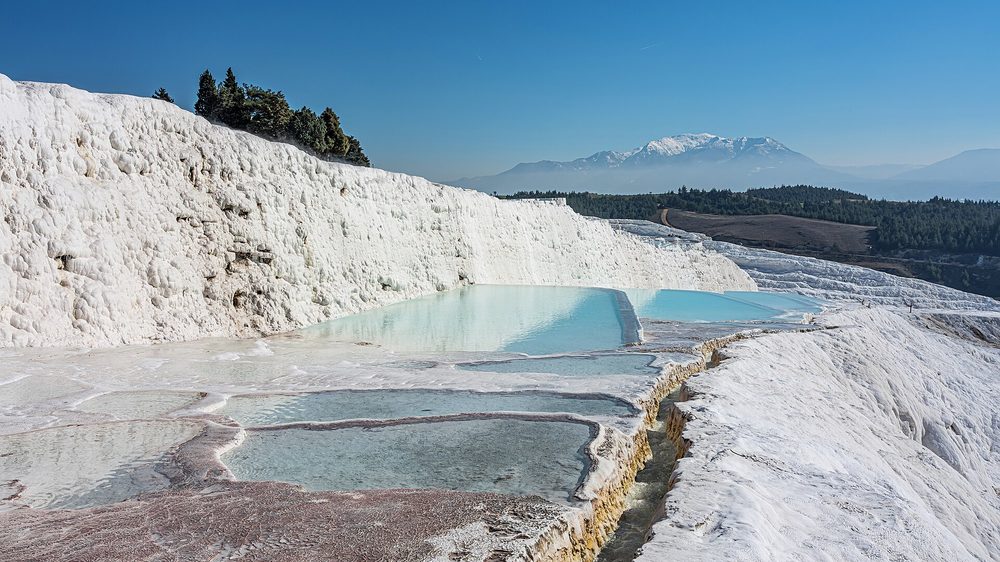
Pamukkale, with its white travertine terraces and the ruins of Hierapolis, is a long but doable day trip from Antalya, roughly three hours each way. The drive runs inland through farmland and over hill passes. Leave early, because the terraces are at their best in the morning light and the round trip eats most of the day. A car makes this far easier than juggling buses.
A car turns the whole Mediterranean coast into your own itinerary. Stick to the limits, keep the HGS tag in the windscreen, drive defensively in the cities, and the rest of Turkey opens up at your own pace.