
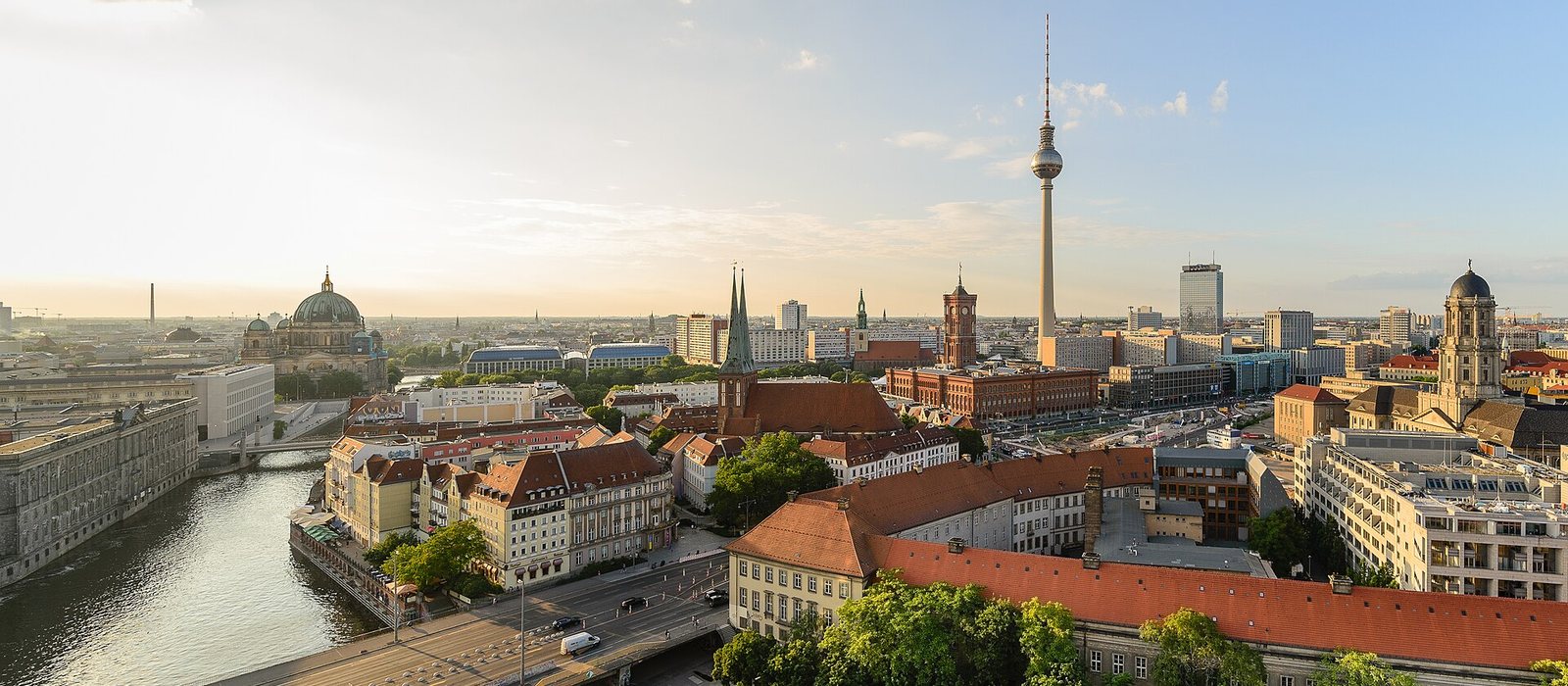
The best way to get around Berlin is the combination of the U-Bahn and S-Bahn, backed up by trams and buses, all on a single ticket. Berlin is huge by European standards, but the network is dense enough that most visitors never think about a car inside the city. Trains run every few minutes, they run late, and one day ticket covers everything underground and above. The only time a car earns its keep is when you want to leave town, and we will get to that.
If you are weighing whether to skip the rental altogether or rent a car in Berlin for the trips that public transport handles badly, the short version is: use trains in the city, keep the car for day trips. Below is how each option actually works, what it costs, and where the catches are.
What is the best way to get around Berlin?
The best way to get around Berlin is the U-Bahn and S-Bahn together, with trams and buses filling the gaps. Buy a single AB-zone day ticket and you can ride all of them all day. Trains are frequent, clean and run very late, so most visitors never need a taxi or a car inside the city itself.
The U-Bahn and S-Bahn: the backbone
Two rail systems carry most of the load. The U-Bahn (Untergrundbahn) is the metro: mostly underground, ten lines, tight stop spacing, and the network you will use most around the centre, Mitte, Kreuzberg and Charlottenburg. Trains come every 4 to 5 minutes in the day and stay frequent into the evening.
The S-Bahn (Stadtbahn) is the commuter rail: bigger trains, longer distances, fewer stops. It runs the east-west spine through the city (the line past Alexanderplatz, Friedrichstrasse and Zoologischer Garten) and the Ringbahn, the circular line that loops around inner Berlin. If you are crossing the city or heading out to the edges, the S-Bahn is usually faster than the U-Bahn.
Both use the same tickets and the same fare zones, so you can switch between them freely without buying anything new. Stations are marked with a blue U for the U-Bahn and a green S for the S-Bahn, and many big hubs combine both. One thing worth knowing: on weekends the U-Bahn and S-Bahn run through the night, so you rarely get stranded after a late dinner.
Trams: handy in the east
Trams (the Strassenbahn) survive mostly in the former East Berlin: Mitte, Prenzlauer Berg, Friedrichshain and the districts further east. The West lost its trams decades ago, so if you are staying around Charlottenburg you may never see one. Where they do run, they are useful for short hops the U-Bahn does not cover well, and the M-line trams (M1, M4, M10 and so on) are frequent. They take the same tickets as the trains. A few tram lines run all night, which makes them a quiet alternative to the night buses in the east.
Buses and night buses
Buses reach the corners the rail network misses, and a couple of routes are worth riding for their own sake. The 100 and 200 run past the major sights (the Reichstag, Brandenburg Gate, Museum Island, Alexanderplatz), so they double as a cheap sightseeing tour without the tour-bus markup. Grab a seat on the upper deck of a double-decker if you can.
After the trains wind down on weeknights, the night bus network takes over. Night buses carry an N prefix and roughly follow the daytime U-Bahn lines, running every 30 minutes or so. On Friday and Saturday nights the U-Bahn and S-Bahn run continuously anyway, so the night buses mostly matter Sunday to Thursday. Bus stops show the route map and a live countdown, and you board through the front door near the driver during the day.
Fare zones A, B and C
Berlin’s fares work on three concentric zones. Zone A is the city centre inside the S-Bahn Ring. Zone B is the rest of the city out to the boundary. Zone C is the surrounding area in Brandenburg, including Potsdam and BER airport. You do not buy a zone, you buy a ticket that spans zones: AB, BC or ABC.
For nearly everything a visitor does inside Berlin, an AB ticket is the right one. It covers the whole city, every U-Bahn and S-Bahn stop, every tram and bus. You only need to step up to ABC when you go to the airport or out to Potsdam.
| Ticket | Best for | Cost (approx.) | Notes |
|---|---|---|---|
| Single AB | One direct trip | 3.80 euro | Valid 2 hours, one direction, transfers allowed |
| Day ticket AB | A full day of sightseeing | 9.90 euro | Unlimited rides until 3am next day |
| Day ticket ABC | Day including airport or Potsdam | 11.50 euro | Same as AB but reaches zone C |
| Berlin Welcome Card | Visitors over several days | from ~28 euro (48h AB) | Travel plus discounts on attractions |
| 7-day AB | Longer stays | ~41 euro | Cheapest if you stay 5 or more days |
Prices shift a little each year, so treat these as a guide rather than gospel. The day ticket pays for itself after roughly three rides, which most sightseeing days clear easily.
The AB day ticket and the Welcome Card
For a typical visit, two options cover almost everyone. The AB day ticket (the Tageskarte) is the simplest: buy it, validate it, ride anything in zones A and B until 3am the next morning. The Berlin Welcome Card bundles the same travel with discounts at museums, tours and some restaurants, and comes in 48-hour, 72-hour and longer versions. If you plan to hit several paid attractions, the Welcome Card usually works out cheaper than buying everything separately. If you mostly want to ride trains and wander, the plain day ticket is fine.
You can buy tickets from the machines on station platforms (they take cards and cash and switch to English), from the BVG and S-Bahn apps, or at ticket counters in larger stations. The apps are the easiest route, since a phone ticket is validated automatically when you buy it.
Validating tickets and the honour system
Berlin runs on trust, and this trips up newcomers. There are no barriers at U-Bahn or S-Bahn stations. You walk straight onto the platform. But a paper ticket is not valid until you stamp it in one of the small red or yellow boxes on the platform or inside trams and buses. The stamp prints the time and date, which starts the clock on your ticket.
Plain-clothes inspectors board trains at random and ask to see a validated ticket. Riding without one, or with an unstamped one, means a 60 euro fine paid on the spot, and “I forgot” does not help. App tickets and day tickets bought for the day are already validated, so the stamping only matters for single paper tickets. The rule is simple: if it is paper and unstamped, find the box before you board.
Getting to and from BER airport
Berlin Brandenburg Airport (BER) sits southeast of the city in fare zone C, so any ticket to or from the airport has to be an ABC one. The good news is the rail link is direct and cheap. The Airport Express regional trains (FEX) and several S-Bahn and regional lines connect BER to the centre in about 30 to 45 minutes depending on where you are headed. Trains leave from the station directly under Terminal 1.
An ABC single or day ticket costs a fraction of a taxi, and the train is usually faster than the road at busy times. A taxi from BER to central Berlin runs roughly 50 to 60 euro and takes 40 minutes to an hour. Unless you are arriving very late or hauling a lot of luggage, the train is the obvious choice. If you land after the regular trains stop, night services and buses still run, so you are not stuck.
Cycling: flat, cheap and pleasant
Berlin is flat, spread out and increasingly built for bikes, which makes cycling one of the nicer ways to see it. Protected lanes line many main roads, side streets are calm, and the city keeps adding cycle infrastructure. Drivers are used to cyclists, which is not true everywhere in Europe.
Bike share is easy to find. Nextbike and several app-based schemes let you unlock a bike from a phone and drop it at the end of your ride, and plenty of shops rent better bikes by the day if you want to cover more ground. A day on a bike around the Tiergarten, along the Spree and through the eastern districts beats sitting in a train, weather permitting. You can also take a bike on the U-Bahn and S-Bahn outside peak hours with a bike ticket, which helps if you want to ride one way and train back.
Taxis and rideshare
Taxis are plentiful, metered and regulated, and you can hail one on the street, find them at ranks, or book through the FreeNow app. They make sense late at night, with heavy bags, or in a group where the fare splits well. Inside the city, though, a taxi rarely beats the train for speed during the day, and it always costs more.
Rideshare exists in the form of Uber, Bolt and FreeNow, which all operate in Berlin, often through licensed taxi and hire-car drivers. Prices are broadly similar to taxis. For most visitor trips, the train wins on cost and time, and you keep the taxi or app in reserve for the awkward late hour or the airport run with too much luggage.
When a rental car is actually worth it
Here is the honest verdict: you do not need a car in Berlin, and for getting around the city a car is a liability. Parking is scarce and metered, traffic clogs at peak times, and many central streets are one-way mazes. The train network does everything a car would, faster and cheaper, and you avoid hunting for a space.
A car earns its place the moment you want to leave the city. Day trips are where Berlin’s public transport gets slower and a rental gets liberating:
- Potsdam and its palaces, easy by train but more flexible by car if you want to combine several sites
- Dresden, about two hours south, doable as a long day trip
- The Spreewald, the canal-laced landscape southeast of Berlin, where a car opens up the villages between waterways
- The Baltic coast, a couple of hours north, where trains thin out and a car lets you reach the quieter beaches
For any of these, picking up a car for a day or two makes sense, especially with two or more people splitting the cost. If you plan to drive, it is worth reading up on driving in Germany for tourists first, since the Autobahn, the low-emission zones and the parking rules all have quirks. And timing your trip well helps: our guide to the best time to visit Germany covers when the day-trip weather and the crowds line up in your favour.
| Option | Best for | Cost | Notes |
|---|---|---|---|
| U-Bahn | City centre, short hops | AB day 9.90 euro | Frequent, mostly underground, runs all night on weekends |
| S-Bahn | Crossing the city, the Ring, the airport | Same AB/ABC ticket | Faster over distance, links to BER in zone C |
| Tram | Eastern districts | Same ticket | Mostly former East Berlin, some run overnight |
| Bus | Gaps in the rail map, sightseeing on routes 100/200 | Same ticket | Night buses (N lines) Sunday to Thursday |
| Taxi / rideshare | Late nights, heavy bags, groups | ~50-60 euro airport run | Plentiful, regulated, slower than trains by day |
| Bike | Sightseeing in good weather | Bike share from a few euro | Flat city, good lanes, take bikes on trains off-peak |
| Rental car | Day trips beyond the city | From a daily rate | A liability inside the city, great for Potsdam, Dresden, the Baltic |
So the verdict stands. In Berlin, ride the trains, buy an AB day ticket, and validate it. Save the rental car for the day you point it at Potsdam or the coast, and the city itself will reward you for leaving it parked.