
The easiest way to get around Dubai is a mix of the Metro for the main spine of the city and a taxi, Uber or rental car for everything the trains miss. Dubai is built for cars, the roads are wide and well signed, and most attractions sit far apart. So your real choice comes down to how much you plan to move, whether you want to reach the desert and the beaches, and how much you care about cost versus convenience. If your trip stays inside Downtown and the Marina, public transport covers it. The moment you want Hatta, a desert camp, the East Coast or a quiet beach, a rent a car in Dubai starts to make far more sense than stacking up rideshare fares.
What is the best way to get around Dubai?
For most visitors the best mix is the Dubai Metro for travel along Sheikh Zayed Road plus taxis or Uber for short hops. If you want beaches, the desert, Hatta or day trips to Abu Dhabi, rent a car. Fuel is cheap, roads are excellent, and one car beats four people paying separate fares.
Dubai transport options at a glance
Here is how the main ways to move around the city compare on what they do well, what they cost and where they let you down.
| Option | Best for | Rough cost | Downside |
|---|---|---|---|
| Metro | Sheikh Zayed Road, Downtown, DXB airport | AED 3 to 8 per trip on a Nol card | No beaches, no desert, gaps in coverage |
| Taxi (RTA) | Short hops, late nights, no app needed | AED 12 start, around AED 2 per km | Costs add up, surge at peak times |
| Uber / Careem | Door to door, fixed price upfront | AED 15 to 60 per ride in the city | Pricier than taxis, surge pricing |
| Rental car | Beaches, desert, Hatta, Abu Dhabi trips | From AED 80 to 150 a day plus fuel | Parking fees, Salik tolls, you drive |
| Tram / bus | Marina and JBR, budget travel | AED 3 to 8 per trip on a Nol card | Slow, limited routes, hot waits |
The Dubai Metro
The Metro is the backbone of public transport and the cheapest way to travel along the city’s main corridor. Two lines do most of the work. The Red Line runs the length of Sheikh Zayed Road from Centrepoint in the north down past Downtown, Business Bay, the Marina and out to Expo City, with branches to both terminals at DXB airport. The Green Line loops through older Dubai, Deira and the Creek. They cross at two interchange stations, so you rarely need more than one change.
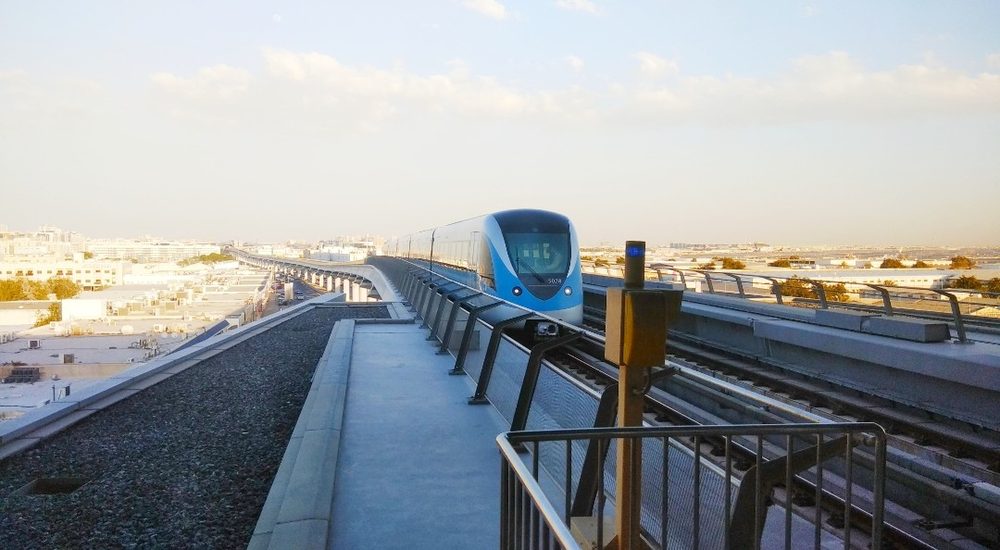
To ride it you need a Nol card. Buy a Silver Nol at any station, load credit, and tap in and out. A single journey costs between AED 3 and roughly AED 8 depending on how many zones you cross. Trains run driverless, come every few minutes, and the Gold Class carriage at the front gives you more space for a higher fare. Stations are air conditioned, which matters a lot in summer.
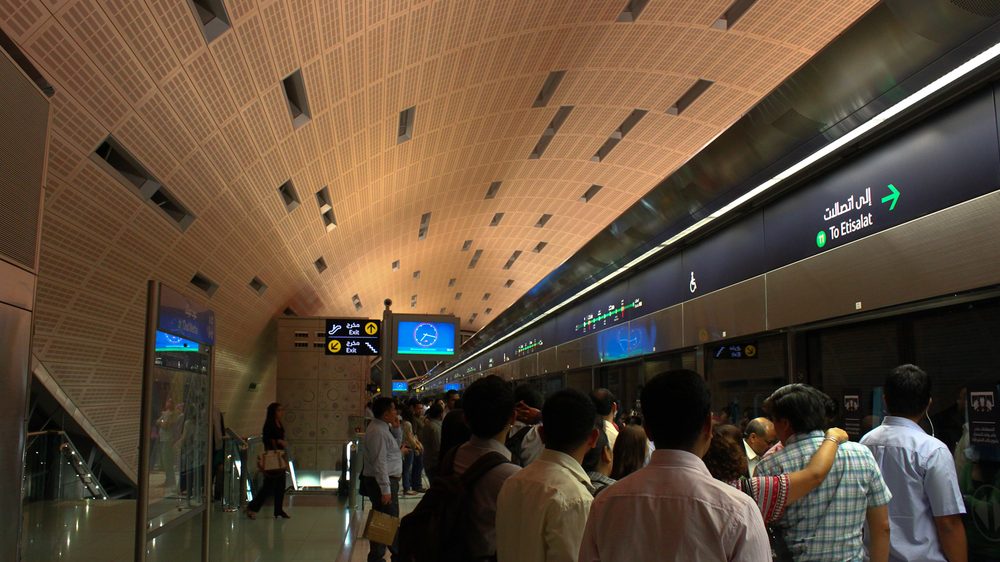
The catch is what the Metro does not reach. It connects the airport to Downtown and the Marina cleanly, but it does not run to Jumeirah Beach, the public beaches, the desert, Global Village in the off direction, or most residential pockets. Stations on Sheikh Zayed Road sit beside the highway, so you often face a long, hot walk or a feeder bus at the end. For the spine of a tourist trip it is excellent. For anything off that spine, you will be topping it up with another mode.
Operating hours are worth checking too. Trains run from early morning until past midnight on weekends and a little earlier on weekdays, so a late dinner or a night out usually means a taxi home. On Friday the first trains start later than on other days. If your hotel sits within a ten minute walk of a station, the Metro will carry most of your daily travel. If it does not, the walk in the heat changes the equation fast, and you may find yourself reaching for an app before you have even started the train portion of the journey.
Taxis in Dubai
Dubai taxis are metered, regulated by the RTA, and easy to flag or find at ranks outside malls, hotels and stations. The cream colored cars are the standard fleet, and you will also see pink roofed taxis driven by women for women and families. Fares start around AED 12 and climb at roughly AED 2 per kilometre, with a higher starting fare late at night and a minimum charge on every trip.
For short rides taxis are often the cheapest door to door choice, and you do not need an app or a local SIM. Drivers take cards in most cars now. Where it gets expensive is distance and traffic. A run from the Marina to Downtown in rush hour can creep well past AED 60 once you sit in the Sheikh Zayed Road crawl. You can also book RTA taxis through the official app if you do not want to wait at the curb.
One thing to know is that crossing between Dubai and the airport, or in and out of a few zones, can add a small fixed surcharge on top of the meter. Tipping is not expected but rounding up the fare is common and appreciated. If you are heading somewhere off the main grid, it helps to have the destination pinned on a map to show the driver, since some newer developments are easier to point to than to name.
Uber and Careem
Both ride hailing apps work well across Dubai, and most visitors install one or both. Careem is the homegrown option, owned locally and tuned to the region, with car, bike and even errand services. Uber runs the standard global app. Prices land a bit above metered taxis because you are paying for the convenience of door to door pickup and a price you see before you ride.
The real advantage is certainty. You get a fixed quote, a tracked driver, and no fumbling with directions or cash. On a normal city ride expect AED 15 to 60. During rain, late nights or big events, surge pricing kicks in and a short ride can suddenly cost double. If you are travelling in a group, splitting one larger Uber often works out cheaper per head than several Metro tickets, but across a full day of trips the meter keeps running while a rental car sits parked for free in many spots.
The tram and buses
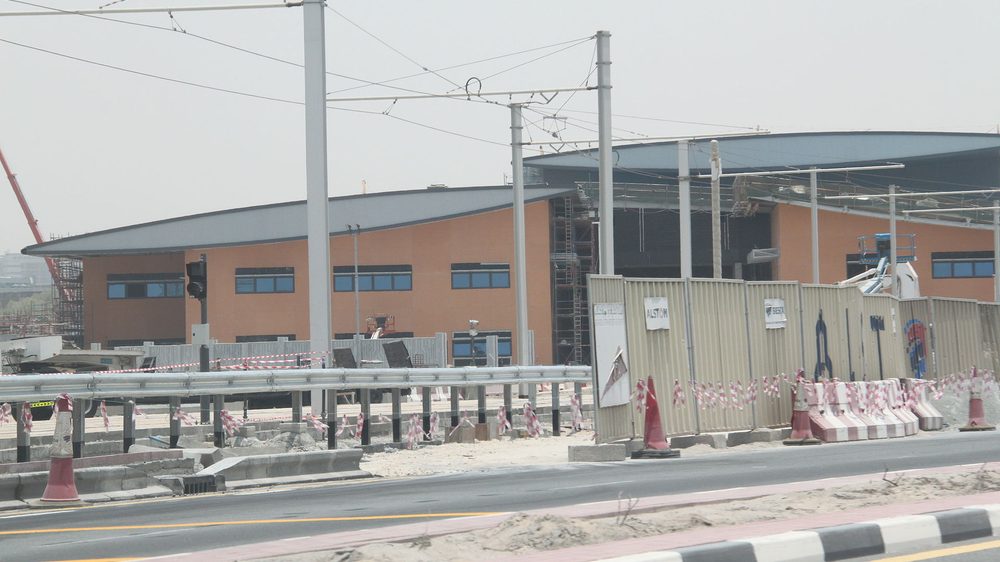
The Dubai Tram runs a short loop through the Marina and JBR, linking into the Red Line Metro at two points and into the Palm monorail. It is handy if you are staying in that exact area and want to avoid the heat between the beach, the malls and the Metro. Outside that pocket it does not help much.
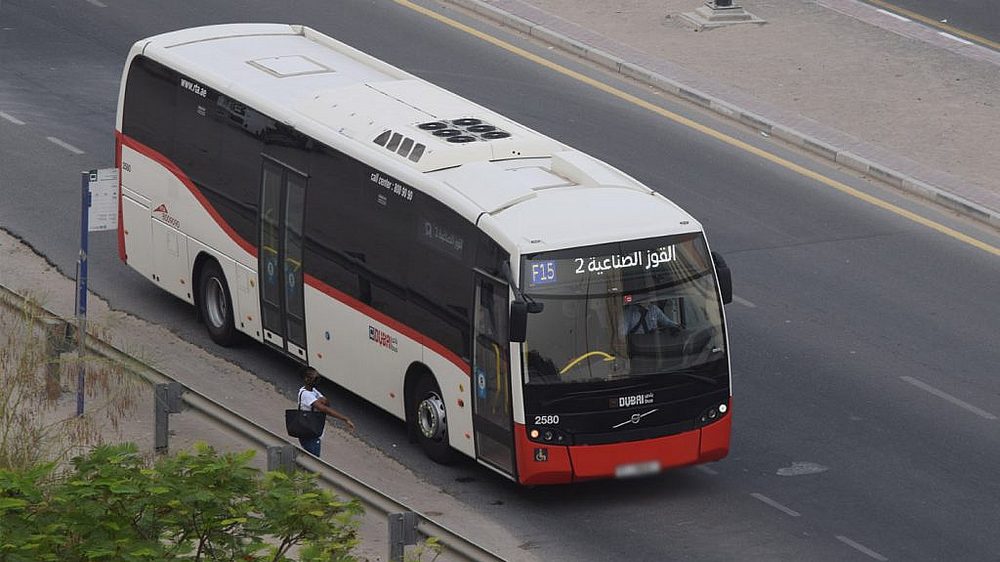
The RTA bus network is wide and very cheap, using the same Nol card as the Metro. Buses reach areas the trains skip, including some beach and residential zones. The trade off is time. Routes can be slow, waits at open air stops are punishing in summer, and working out connections takes patience. Buses are a budget traveller’s tool more than a tourist’s, though the Nol card making one tap work across Metro, tram and bus is genuinely convenient.
Renting a car in Dubai
A rental car turns the whole map open. Dubai’s roads are some of the best you will drive on, fuel is cheap by global standards, and a small car rents from around AED 80 to 150 a day. For families or groups, one car often costs less than a day of stacked taxi and Uber fares, and it removes the wait for every pickup.
The real win is reach. The Metro and rideshare keep you tethered to the city. With a car you can drive out to Hatta and its mountain pools, run a desert trip on your own timing, hit the quieter beaches up the coast, or take the 90 minute motorway run to Abu Dhabi for the Grand Mosque and Louvre without paying a fortune for a one way ride. A practical, fuel sipping pick for this is the Toyota Corolla, which handles city traffic and highway trips with ease.
There are things to plan for. Salik is the automatic toll system: you pass under a gantry on Sheikh Zayed Road and other key routes and pay a few dirhams each time, billed through the rental. Paid parking applies in busy districts, charged by the hour through meters or the RTA app, though many malls and hotels offer free parking. Traffic on Sheikh Zayed Road at peak times is real, and fines for speeding are enforced by camera. None of this is hard once you know it, and our guide to driving in Dubai for tourists walks through the rules, the licence requirements and the parking apps in detail.
When each option wins
No single mode wins for everyone, so match it to your day.
The Metro wins when you are moving along Sheikh Zayed Road, arriving at or leaving DXB, and want the cheapest, most predictable ride with no traffic. For a solo traveller bouncing between Downtown, the Marina and the airport, it is hard to beat.
Taxis and Uber win for short trips, late nights, rain, and the last stretch the Metro does not cover. They are the right call when you want zero planning and are only making a handful of trips, or when one shared ride splits well across a group.
A rental car wins the moment your plans leave the city core. If you want the desert, Hatta, the East Coast beaches, a day in Abu Dhabi, or you are travelling as a family making many trips a day, the maths and the freedom both swing toward driving. Cheap fuel and free parking in many spots mean a car frequently undercuts a full day of rideshare while letting you go wherever you like, whenever you like.
Most visitors end up using two or three of these. Tap the Metro and grab a taxi for a city stay, and pick up a rental for the days you head out of town. Plan around what you actually want to see, and the right mix becomes obvious.