

You can get around Miami without a car in a handful of neighborhoods, and almost nowhere else. If you are staying in South Beach, Brickell or Downtown and you plan to stay there, you can skip the rental and lean on the free Metromover, the Miami Beach Trolley and the occasional rideshare. The moment you want to reach another part of the city, or do anything beyond the urban core, the math changes fast. Miami was built around the highway, and the transit network only partly fights that. This guide walks through what actually works, what it costs, and the trips where you will want to rent a car in Miami instead of waiting at a bus stop.

Can you get around Miami without a car?
Yes, in Downtown, Brickell and South Beach, where the free Metromover, the trolley and short rideshare hops cover most of what a visitor needs. No, for everywhere else. Miami Beach has no rail link, the suburbs are spread thin, and day trips to the Keys, the Everglades or Fort Lauderdale have no practical transit option. For those, a car wins.
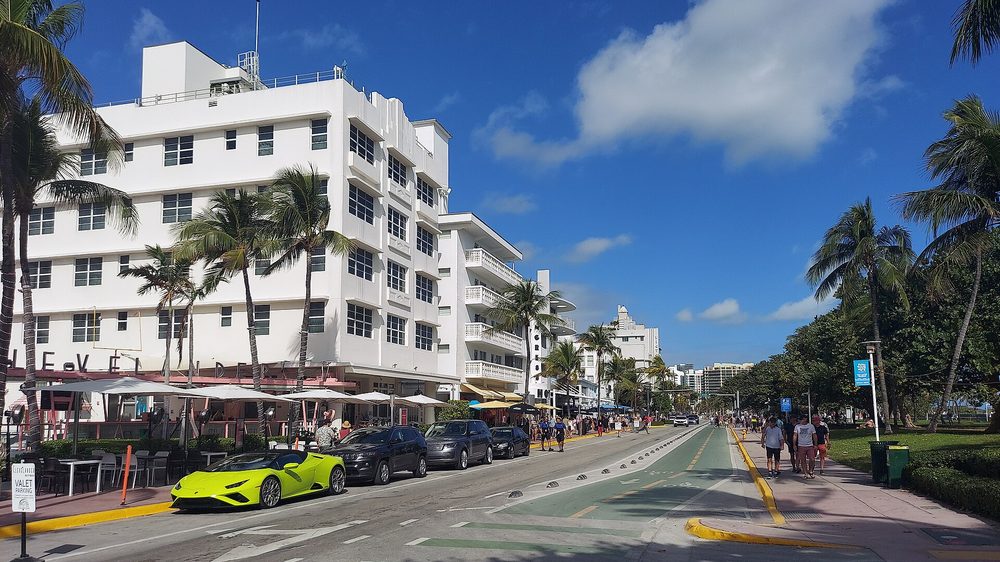
How the transit options compare
Here is the quick version before the details. Costs are 2026 ballpark figures for a visitor, not residents with monthly passes.
| Option | Covers | Cost | Downside |
|---|---|---|---|
| Metromover | Downtown, Brickell, Omni loops | Free | Tiny footprint, Downtown only |
| Metrorail | Airport to Downtown, Dadeland, Hialeah | $2.25 per ride | Does not reach Miami Beach |
| Metrobus | Most of Miami-Dade, including beach routes | $2.25 per ride | Slow, infrequent off-peak |
| Miami Beach Trolley | Within Miami Beach and South Beach | Free | Stays inside the island |
| Rideshare (Uber/Lyft) | Anywhere | $12 to $60+ per trip | Surge pricing, airport waits |
| Rental car | Everywhere plus day trips | From ~$35 per day | Parking fees, beach traffic |
Where transit actually works
Downtown, Brickell and the free Metromover
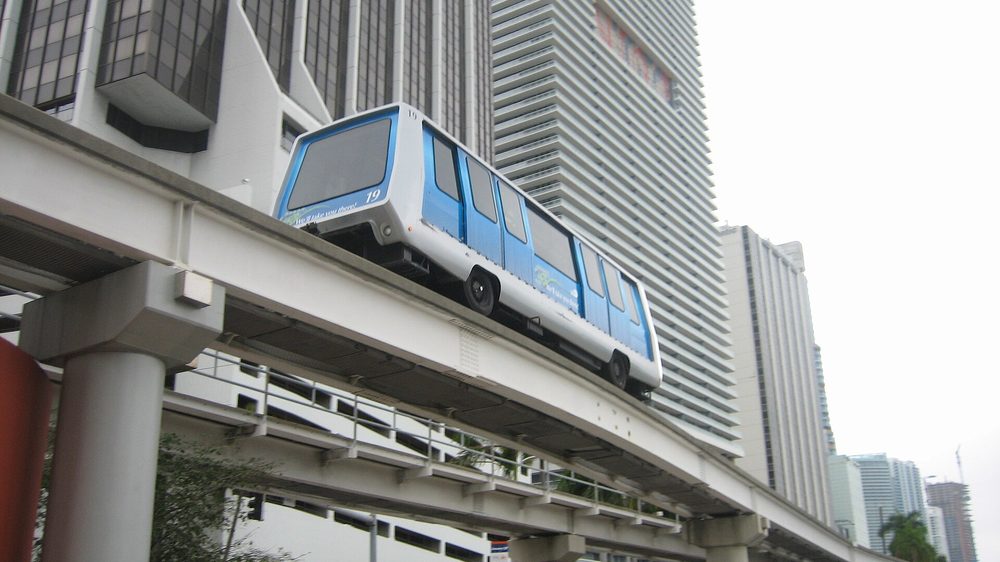
The Metromover is the one piece of Miami transit that feels genuinely easy. It is a free automated train running on elevated tracks through Downtown, Brickell and the Omni area, with three loops and stations every couple of blocks. No ticket, no tap, you just walk on. If your hotel is in Brickell and you want dinner Downtown or a stroll to Bayside Marketplace, the Metromover handles it without you spending a dollar.
The catch is the footprint. The whole system covers roughly four and a half miles. It is brilliant inside that zone and useless outside it. Treat it as a neighborhood circulator, not a way across the city. Trains run from early morning until midnight, more often during the day, so timing rarely matters unless you are out very late. If you are choosing a hotel and you want to be car-free, picking one within a few blocks of a Metromover station is the single best move you can make.
Miami Beach and the trolley
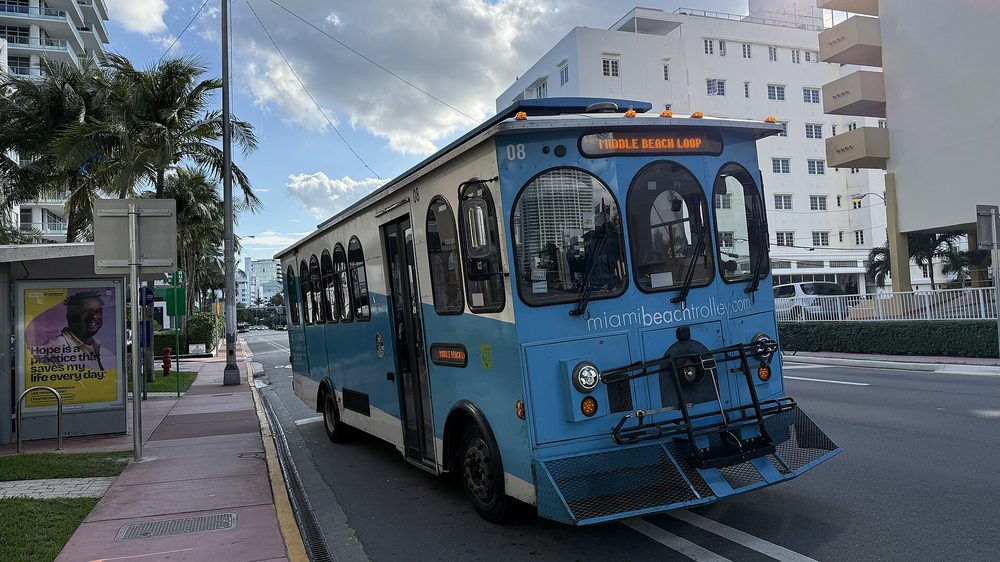
Miami Beach runs its own free trolley network covering South Beach, Mid-Beach and North Beach. The trolleys come every 10 to 20 minutes and connect the main residential and shopping streets to the beach. For a visitor based in South Beach who wants to move along the island without paying for short Ubers, the trolley does the job. There is also the South Beach Loop that links the central hotel district.
Again, the limit is the island. The trolley stays inside Miami Beach. It will not take you back across the causeway to Downtown, the airport or anywhere on the mainland. There is no rail bridge to the beach and no plan for one, so the trolley plus a rideshare for the causeway crossing is the standard car-free combo for beach-based visitors. Worth knowing: the trolley does not always show up on the minute, and routes can be cut during big storms or events, so leave a little buffer if you are catching a flight.
Metrorail and Metrobus reach
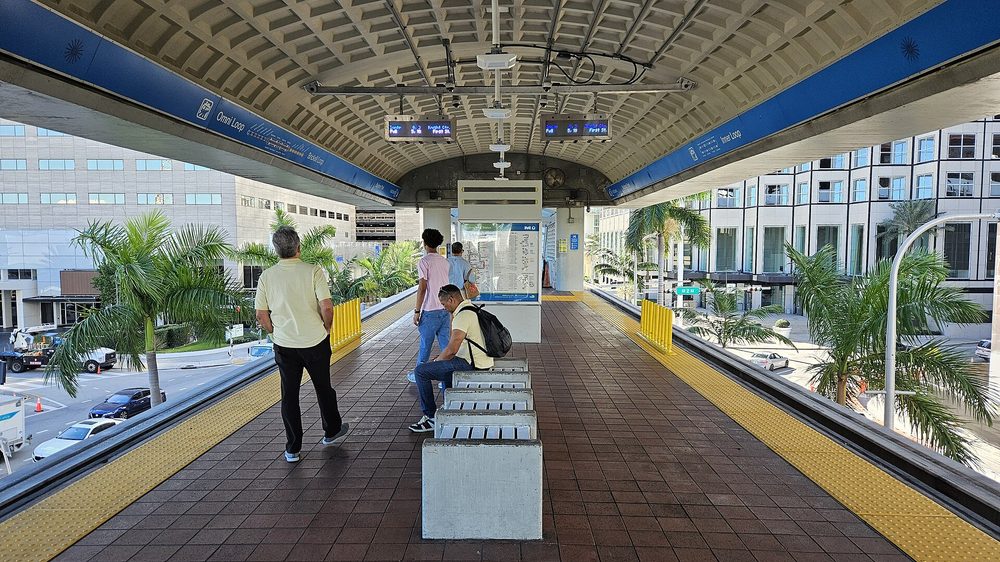
Metrorail is Miami’s single heavy-rail line. It runs from the airport area down through Downtown to Dadeland in the south and out to Hialeah, with one Green and one Orange line sharing most of the track. A ride is $2.25, and it connects to the Metromover for free at Government Center. If your trip happens to fall along that corridor, say airport to Brickell, it is cheap and reliable.
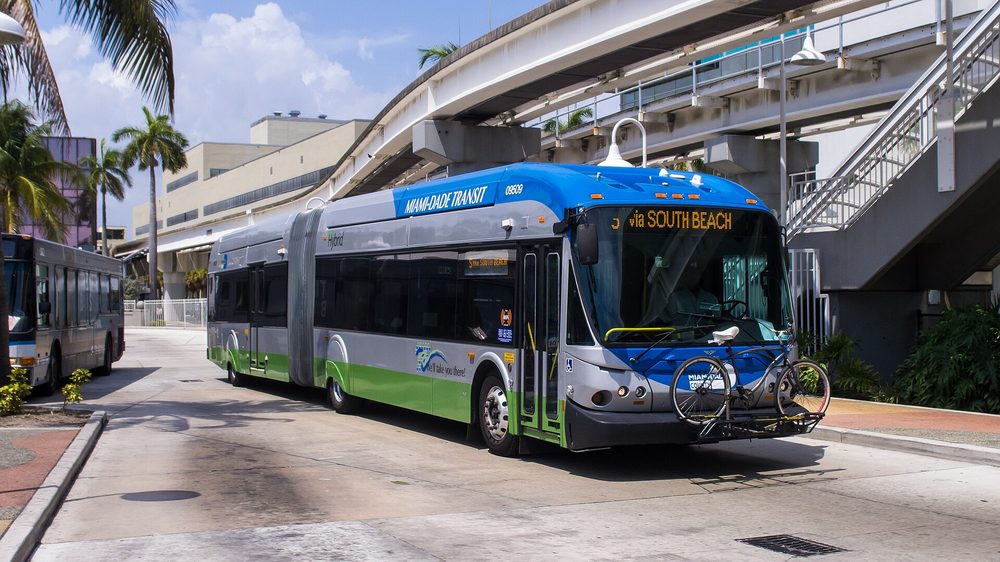
Most trips do not fall along that corridor. Metrorail skips Miami Beach entirely, skips Wynwood, skips most of the neighborhoods tourists care about. Metrobus fills some of those gaps and technically reaches almost everywhere in Miami-Dade, including beach routes like the 120 and the 150 airport flyer. Buses are the honest workhorse of the system, but they are slow, they share Miami’s traffic, and off-peak frequencies stretch to 30 minutes or more. You can use the bus, but plan for it to eat your time.
One thing in the system’s favor is the fare card. A single Metrobus or Metrorail ride is $2.25, and an EASY Card or the GO Miami-Dade Transit app lets you transfer between bus and rail without paying twice within a set window. For a budget traveler willing to trade time for money, that makes a full day of city sightseeing genuinely cheap. The honest tradeoff is that what costs you a few dollars on transit can cost you an hour you would rather spend at the beach.
Rideshare in Miami: Uber and Lyft
For most car-free visitors, rideshare is the real backbone, not the trains. Uber and Lyft cover the whole city and they fill every gap the transit map leaves open. A short hop within South Beach or across Brickell usually runs $12 to $20. A ride from South Beach to Wynwood is around $20 to $30 depending on traffic.
The number that surprises people is the airport and the longer runs. MIA to South Beach is often $35 to $55, and more during surge or rush hour. A late-night ride or anything during a big event can spike well past that. If you are taking two or three rides a day, the daily total starts to rival or beat a rental plus parking. Rideshare is convenient and flexible. It is not always cheap, and it is the line item that quietly adds up.
A few practical notes from people who do this regularly. Surge pricing in Miami is real and it hits at predictable times: weekday rush hour, weekend nights in South Beach, and whenever a cruise ship empties out at the port. Compare Uber and Lyft side by side before you book, because the gap can be several dollars on the same route. For the airport, follow the signs to the rideshare pickup zone rather than the curb where you exit baggage claim, since the designated area is where drivers are allowed to wait. If you are traveling in a group, splitting a single car often beats individual transit fares, which is part of why so many visitors give up on the bus entirely.
Getting in from the airport
Miami International is one of the few places where car-free arrival is genuinely smooth. The free MIA Mover, an automated people mover, connects the terminals to the Miami Intermodal Center in about five minutes. From there you can pick up Metrorail straight into Downtown for $2.25, or grab a Metrobus, or get a rideshare from the designated pickup area.
If your hotel is on the Metrorail line or in Downtown, the airport to Downtown trip by rail is one of the best transit deals in the city. If your hotel is on Miami Beach, there is no rail option, so it is the bus or a $35-plus rideshare across the causeway. That single fact, no train to the beach, shapes most car-free trips here.
Where you still need a car
This is where Miami’s reputation as a driving city earns out. Several common trips have no good transit answer.
- Connecting Miami Beach to the mainland repeatedly. One trip is fine by bus or rideshare. Doing it three times a day gets expensive and slow.
- The Florida Keys. There is no convenient public transport down to Key Largo, Islamorada or Key West. It is a rental car or an organized tour, full stop. The drive itself is one of the best parts of a Miami trip.
- Everglades National Park. The main entrances and the airboat operators sit well outside any transit line. You drive, or you book a tour that includes transport.
- Fort Lauderdale and Palm Beach. The Brightline train does link Miami to Fort Lauderdale and West Palm Beach and is genuinely good for that specific route. But once you arrive you are back to needing wheels, and other suburban trips have no equivalent.
- Wynwood at night. The murals are walkable by day if you rideshare in, but late at night the area is poorly served by transit and rideshare surge pricing kicks in hard.
- The big malls and outlets. Aventura Mall, Dolphin Mall and the Sawgrass outlets are all built for drivers, with transit access that is technically possible and practically painful.
If your plan includes even two of these, the car-free approach stops saving you money and starts costing you days. A reliable midsize like the Toyota Camry handles the causeways, the Keys drive and mall parking without drama, and it is far cheaper per mile than stacking up airport and long-haul rideshares.
The honest verdict
If your Miami trip is a few days of South Beach, Brickell and Downtown, with one or two excursions you are happy to book as tours, you can do it without a car. The free Metromover and the free trolley do real work, and rideshare covers the rest. Budget for the airport transfer and accept that the bus is slow.
If your trip involves the Keys, the Everglades, repeated beach-to-mainland hops, late nights in Wynwood, or any of the suburban draws, rent. The break-even comes faster than most visitors expect, usually around the second or third long rideshare. For a deeper look at the tradeoff, see our guide on whether you do you need a car in Miami. The short answer: it depends entirely on how far you plan to roam.