

To rent a car in Spain you need a valid driving licence you have held for at least one year, your passport or national ID, a credit card in the main driver’s name for the deposit, and you usually have to be 21 or older. If your licence is not from the EU or in the Latin alphabet, you will also want an International Driving Permit. That is the short version, and for most tourists the process is quick. Below is the detail that the rental desk actually checks, so you arrive with the right documents and avoid a nasty surprise at the counter.

This guide covers licence rules by country, what an IDP is and where to get one, the minimum age and young-driver fees, deposits and credit cards, insurance, plus a few Spain-specific things like low-emission zones and tolls. If you already know the basics and just want to rent a car in Spain, you can compare cars by city; otherwise read on.
What do you need to rent a car in Spain?
You need a driving licence held for at least one year, a passport or national ID card, and a credit card in the main driver’s name to cover the deposit. The minimum age is normally 21. Non-EU drivers should carry an International Driving Permit alongside the home licence, and it is required if your licence uses a non-Latin alphabet.
Requirements by driver origin
The licence rule depends on where your licence was issued. Use the table to find your situation, then read the notes below it.
| Driver from | Licence accepted | IDP needed? | Notes |
|---|---|---|---|
| EU / EEA | Yes, national licence | No | Drive on your home licence as if at home. |
| UK | Yes, photocard licence | No | Bring the photocard; the paper counterpart is not needed. |
| USA | Yes, with passport | Recommended, sometimes required | Many desks ask for an IDP; carry one to be safe. |
| Canada | Yes, with passport | Recommended, sometimes required | Same as the USA; an IDP avoids questions at the counter. |
| Australia | Yes, with passport | Recommended | English licence, but an IDP smooths things over. |
| Other / non-Latin alphabet | Home licence plus IDP | Yes, required | IDP is mandatory if the licence is not in Latin script. |
Driving licence rules explained
EU, EEA and UK drivers
If your licence was issued anywhere in the EU or EEA, you drive in Spain on that licence with nothing extra. It is treated the same as a Spanish licence for the length of your visit. UK drivers are in the same easy position after Brexit: a UK photocard licence is accepted, and you do not need an International Driving Permit. Just make sure the photocard is current, because an expired card will be refused even if you still drive at home on the strength of it.
Non-EU drivers and the alphabet question
Drivers from the USA, Canada, Australia and most other countries can rent in Spain on their national licence, but two things matter. First, you must present it with your passport, since the licence alone is not enough proof of identity for the contract. Second, the licence has to be readable to the staff. A licence printed only in a non-Latin alphabet (for example Arabic, Cyrillic, Chinese, Japanese or Korean) will not be accepted on its own, and you are legally required to carry an International Driving Permit with it.
Even when an IDP is not strictly mandatory, US and Canadian visitors often find that the rental desk asks for one anyway. Policies vary between branches and between companies, and a clerk who cannot read your licence may simply decline to hand over the keys. Carrying an IDP costs little and removes that risk, so for non-EU drivers it is the safe default. For a fuller breakdown, see our guide on whether do you need an International Driving Permit in Spain.
What is an International Driving Permit and where to get one
An International Driving Permit is a small booklet that translates your existing licence into several languages, including Spanish. It is not a licence on its own and has no value without the original card, so you must carry both. Think of it as an official translation that Spanish police and rental staff recognise.
You can only get an IDP in the country that issued your licence, and you have to arrange it before you travel. There is no way to buy a valid one once you are in Spain. In the USA it comes from AAA or AATA, in the UK from the Post Office, in Canada from the CAA, and in Australia from the state motoring clubs. The fee is modest, it is usually issued the same day or by post within a couple of weeks, and most are valid for one year. Apply a few weeks before your trip so a postal delay does not leave you stuck.
Minimum age and young-driver surcharge
The standard minimum age to rent a car in Spain is 21, and you must have held your licence for at least one year. Some companies and some vehicle categories set the bar at 23 or 25, and premium or larger cars are often restricted to older drivers. There is no single national rule, so the exact age depends on the supplier and the car.
Drivers under 25 should expect a young-driver surcharge. This is a daily fee, commonly somewhere around 5 to 35 euros per day depending on the company and your age, and it is charged on top of the rental price. It is not a fine or a penalty, just the way insurers price the extra risk. Budget for it when you compare quotes, because a headline rate that looks cheap can change once the surcharge is added. Older drivers are sometimes capped too, with surcharges or restrictions for renters over 70 in some fleets.
Deposit and credit card
Almost every company holds a deposit on a credit card in the main driver’s name. The card has to be a real credit card, not a debit card or a prepaid card, because the company needs to ring-fence an amount rather than take the money. The hold typically runs from a few hundred euros up to a couple of thousand for larger or more expensive vehicles, and it is released after you return the car undamaged.
Make sure the card has enough available limit to cover both the deposit and your other spending while abroad, and that the name on the card matches the name on the rental agreement. If you would rather not tie up a large sum, no-deposit options do exist with some local partners, and certain bookings reduce or remove the hold when you take their full insurance. Check this before you book if a big deposit would be a problem for you.
Insurance: CDW and excess
Spanish rentals normally include basic third-party cover by law, plus a Collision Damage Waiver and theft protection. The key thing to understand is the excess, sometimes called the deductible. Even with CDW, you are liable for damage up to that excess amount, which can run into the high hundreds or thousands of euros, and that is usually the figure they block on your card.
Before you sign, check three things. What is the excess, and is it the amount being held as a deposit? Are tyres, windscreen and the underside of the car covered, since these are common exclusions? And is roadside assistance included? You can reduce the excess to zero by buying the company’s full protection at the desk, or by arranging a standalone excess-reimbursement policy in advance, which is often cheaper. Either way, decide before you reach the counter so you are not making the call under pressure.
Driving across borders
Spain shares open land borders with Portugal, France, Andorra and Gibraltar, and many tourists are tempted to cross. You usually can, but you must tell the rental company first and get it noted on the contract. Some companies allow it freely, some charge a cross-border fee, and a few do not permit it at all, particularly for trips into Andorra or Gibraltar. Driving abroad without permission can void your insurance, so a quick check when you book is well worth it.
If you are heading to Portugal or France, confirm that your insurance and roadside assistance still apply across the border, and ask whether you need any extra documentation. The car’s registration and insurance papers should stay in the glovebox throughout.
Low-emission zones (ZBE)
Spain has rolled out Zonas de Bajas Emisiones, or low-emission zones, in its larger cities. Barcelona and Madrid both restrict older, more polluting vehicles from central areas, and entering without the right environmental sticker can lead to a fine.

The good news is that rental cars are modern and almost always carry the correct DGT environmental label, so you can drive into the zone legally.
What you should still do is watch for the signs marking the zone boundaries and the parking rules inside them, because access and parking are handled separately.
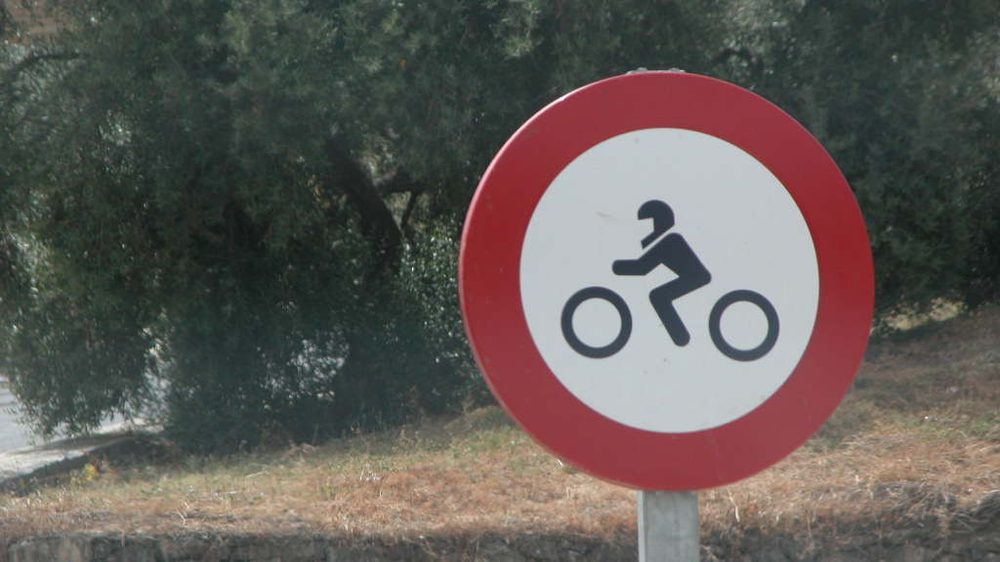
If you are unsure about a particular car, ask the desk to confirm its environmental category. For most tourists in a recent rental this is a non-issue, but it is worth knowing the zones exist so you do not park somewhere you should not.
Tolls (peajes)
Some Spanish motorways are toll roads, known as peajes, though many former toll routes are now free.

Quick checklist before you collect the car
Bring your driving licence held for at least a year, your passport or national ID, an International Driving Permit if you are a non-EU driver, and a credit card in the main driver’s name. Confirm the minimum age and any young-driver surcharge when you book, know your insurance excess, and mention any border crossing in advance. With those sorted, picking up a car in Spain is straightforward, and you can get straight on the road.